
2026
Post-Birth
Entrant
Yidi Wang
Category
Experiential & Immersive - Exhibition Experience
Client's Name
Country / Region
United States
Gallery

About The Entry
Post-Birth began with my body.
During a durational performance, I wore an external uterus and lived through a cycle of simulated pregnancy. Each day was structured by care: monitoring, breathwork, touch, maintenance, and repeated gestures that echoed prenatal routines. This was not a performance of becoming a mother, but of inhabiting the labor that surrounds motherhood—the time, discipline, and bodily attention it demands. As these actions accumulated, they began to activate memories I carried long before the work existed.
I grew up in a family where care was constant but uneven. My mother held nearly all emotional, domestic, and educational responsibility, while my father’s distance was quietly accepted. Her love was protective and controlling, intimate and painful. Over time, I came to understand that this tension was not personal failure, but something inherited—passed through generations shaped by patriarchal expectations. Post-Birth emerged from my desire to step away from that structure without abandoning the figure of the mother altogether.
As the performance continued, it transformed into an installation that holds what could not remain in time alone. The work includes an external uterus preserved in formalin, bacterial cultures grown from my own hair, skin, and nails and placed inside an infant incubator, video recordings of the performed gestures, and a laboratory table scattered with tools and bodily fragments. These elements form a quiet, suspended environment—part archive, part experiment—where care is visible but unresolved.
The “offspring” in Post-Birth are non-human. They do not promise a future or demand emotional attachment. Their presence allows care to exist without ownership, without sacrifice, without obligation. The installation’s sterile whites and transparent surfaces create distance, offering space to observe rather than dramatize, to examine rather than accuse.
Post-Birth is not about giving life. It is about what remains after care—about inheritance, rupture, and the possibility of imagining motherhood differently. It asks what it might mean to stay with care while refusing the systems that have historically defined it.

Entrant
Tomato Tomate
Category
Integrated Marketing - Brand Transformation / Repositioning
Country / Region
United States
Entrant
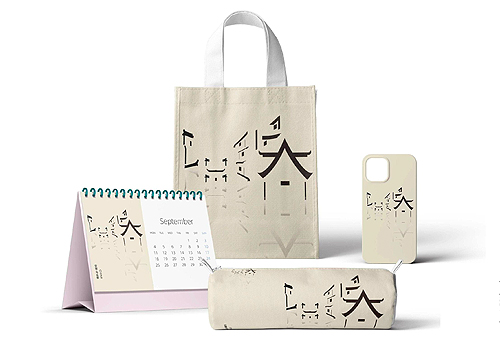
City University of Macau , Faculty of Innovation and Design
Category
Typography - Typefaces / Font System
Country / Region
China

Entrant
Cai Hao
Category
App / Mobile App - Services
Country / Region
United States
Entrant
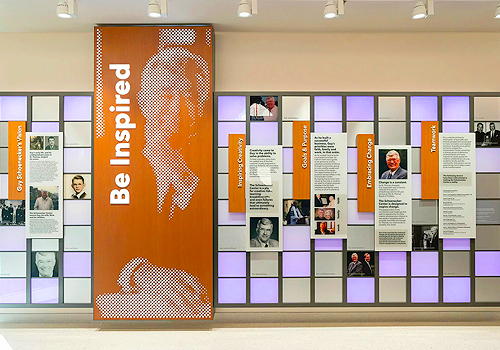
STAR Exhibits and Environments
Category
Corporate Identity - Brand Identity
Country / Region
United States