Interview
Yixiao Qin
United States
Yixiao Qin is an animation director and 3D artist driven by a passion for storytelling and cultural expression, with experience on global projects for League of Legends, BMW, and Fortnite.
1 Congratulations on your achievements in the MUSE Creative Awards! Could you start by introducing yourself or your agency? Can you also share a bit about your journey into your current industry?
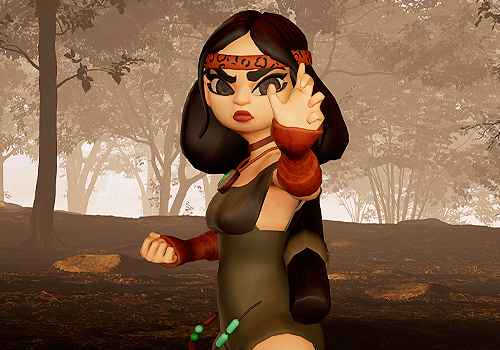
Thank you very much! My name is Yixiao Qin, and I am an animation director and 3D artist, originally from China and a recent MFA graduate in Animation from the Savannah College of Art and Design (SCAD). My animation journey began with a strong passion for visual storytelling and cultural expression. Over the years, I have been fortunate to work on projects with international brands such as League of Legends, BMW, and Fortnite, where I gained valuable experience in both creative production and cross-cultural communication. At SCAD, I developed my graduate thesis film, Chinese Kung Fu Girl, which combines traditional Chinese martial arts with contemporary 3D animation techniques. This project was not only a creative challenge but also a way to honor my cultural heritage while sharing it with a global audience. Through my work, I hope to continue building bridges between cultures, using animation as a universal language that inspires and connects people worldwide.
2 What inspired you to submit your work for this competition, and what does winning mean to you personally and professionally?
I was inspired to submit my work to the MUSE Creative Awards because it is a highly respected international platform that celebrates creativity across industries. For me, it was an opportunity to share Chinese Kung Fu Girl with a global audience and to see how my storytelling could resonate beyond cultural and geographic boundaries. Winning this award is a tremendous honor. Personally, it validates the years of dedication I have invested in both my artistic development and in honoring my cultural heritage through animation. It is deeply meaningful to see a story rooted in traditional Chinese martial arts recognized on an international stage. Professionally, this recognition positions me as a rising creative voice in the animation industry. It demonstrates that my work can meet global standards of excellence and motivates me to continue pursuing projects that combine artistic innovation with cultural storytelling. I see this award not only as an achievement but also as a responsibility to keep creating work that bridges cultures and inspires audiences worldwide.
3 Can you share the story behind your success? What inspired its creation, and what do you feel it represents in today’s industry?
The inspiration for this animation traces back to 2016, when I first began my journey in animation. Since then, I have been deeply motivated to explore how Chinese culture can be reimagined through 3D animation and shared with audiences around the world. My vision has always been to create stories that celebrate heritage while embracing innovation, much like how Kung Fu Panda became a global phenomenon rooted in Chinese culture. This project represents not only my personal dedication to cultural fusion but also my belief that animation can serve as a universal language—one that connects traditions with modern storytelling and inspires global appreciation for cultural diversity.
4 What do you believe set your project apart in such a competitive field? Were there specific elements or strategies that made it shine?
What truly set my project apart was the integration of both motion capture and hand-keyed animation within the same student short film, allowing for a unique blend of precision and artistry. At the same time, I placed strong emphasis on cultural diversity and fusion—bringing different traditions together in a way that feels fresh, meaningful, and globally relevant. This combination of technical innovation and cultural storytelling helped the project stand out in a highly competitive field.
5 Every project has its challenges. Can you share a significant obstacle you faced during this process and how you overcame it?
One of the biggest challenges I faced was balancing the technical complexity of combining motion capture with hand-key animation. As a graduate student project, I had limited time and resources, which required careful planning and constant refinement of the workflow. There were moments when the captured data did not align with the artistic vision, so I had to problem-solve by adjusting rigs and re-animating certain sequences by hand. Through persistence, experimentation, and the integration of both technical and artistic skills, I was able to overcome these challenges and bring the project to life as I had envisioned.
6 Winning an award of this caliber often brings recognition. What do you hope this achievement will mean for your career, your team, or your agency in the long run? Have you already noticed any changes or opportunities arising from this recognition?
Winning the MUSE Creative Awards is not only a great personal honor but also an important milestone in my career as an animation artist. I hope this recognition will open new opportunities to collaborate with global studios and contribute to projects that celebrate cultural diversity. In the long run, I see this award as a strong foundation to build my professional reputation and strengthen my O-1 application as an artist of extraordinary ability. I also hope this recognition inspires my peers and future collaborators to continue exploring cross-cultural storytelling. Even though the award is still recent, I have already noticed growing interest from professionals in my network who are curious about my work and eager to connect. This gives me confidence that my path ahead will be filled with meaningful opportunities.
7 What has the reaction been from clients, audiences, or stakeholders about your winning entry? Any feedback or memorable moments that stand out?
The reaction to my winning entry has been overwhelmingly positive and deeply encouraging. When I shared the news with my thesis committee, they offered heartfelt congratulations, appreciating not only the technical execution but also the cultural storytelling embedded in the animation. My friends, who had followed the project from its inception to completion, were also incredibly supportive, noting how the work thoughtfully represented cultural themes and values. One particularly memorable moment was seeing their genuine excitement and pride—not just for the recognition, but for how the animation celebrated and shared cultural stories. Knowing that my work resonated with others on a cultural level made the achievement feel even more meaningful.
8 For those aspiring to achieve similar success, what advice would you offer to help them not only thrive in their industries but also craft compelling, award-worthy entries? Are there specific practices, mindsets, or strategies you believe are key?
For those aspiring to achieve similar success, I would say that animation has no borders and no language barriers—it doesn’t matter what your native language or culture is. What truly matters is your curiosity, creativity, and dedication to telling stories that resonate universally. From my experience, the animation industry is constantly evolving, and it’s the act of pushing its boundaries that continues to inspire audiences around the world. I also believe it’s essential to stay true to your dreams. The journey can be challenging, but there will always be people supporting you along the way—mentors, peers, and friends who believe in your vision. By combining persistence, cultural awareness, and a willingness to innovate, you can create work that not only excels technically but also connects deeply with people across cultures.
9 The creative industry is constantly evolving. How do you view these changes, and where do you hope to position yourself in the future?
I view the creative industry, especially animation, as constantly evolving and full of opportunities for innovation. Technology, storytelling methods, and audience expectations are always changing, which keeps the field both exciting and challenging. I see these shifts as chances to experiment, push boundaries, and help shape the future of animation. In the years ahead, I hope to position myself as a creator and collaborator who bridges cultural stories with cutting-edge animation techniques. I want to contribute to projects that not only entertain but also inspire and connect audiences around the world, demonstrating that animation is a universal language. Ultimately, my goal is to support the industry’s growth while staying true to meaningful storytelling and authentic cultural representation.
10 Entering awards can be daunting for many, especially those just starting out. What would you say to individuals who have limited experience, or are hesitant to showcase their work in competitions? How can they build confidence and see the value in participating?
For those who are just starting out or feel hesitant about entering competitions, I would say that the most important step is to begin—and to keep going. Getting started is always the hardest part, and even if your animation skills are not fully developed yet, it’s important to persist and share your ideas through your work. Animation is a universal language, and there are people around the world waiting to see your finished piece, even if they don’t speak the same language. For me, this was my first experience as an animation director, and it took a full year to complete the project. That experience taught me that persistence is key, and that dedication and patience can turn a challenging journey into a truly rewarding one.
11 Creativity thrives on community. What message would you like to share with fellow creatives, marketers, and advertising professionals?
I believe it’s important to stay curious and attuned to emerging trends and new developments in the industry. In today’s globalized world, one of the key challenges is helping people break stereotypes and biases while showing the value of traditional cultures. Through creative work, especially animation, we have the opportunity to connect audiences across cultures, celebrate cultural heritage, and foster understanding and appreciation. By staying innovative and culturally aware, we can create meaningful work that both energizes the industry and resonates with audiences worldwide.
12 Winning is a team effort in many cases. Is there someone or a group of people you’d like to dedicate this achievement to, and why?
I’d like to dedicate this achievement to my mentors—Prof. Diana Reichenbach, Prof. John McIntyre, and Prof. Ahmed Elmatarawi—my friends, and everyone who supported me along the way. Their guidance helped me refine not only the technical aspects of the animation but also the cultural storytelling behind it. My friends saw the project grow from an idea into a finished piece, cheering me on every step of the way. This award is also for anyone who believes in the power of animation to connect people across cultures. Even a “solo” project is never truly done alone—collaboration, encouragement, and shared passion are what make creative work meaningful and memorable.
13 If you could describe your award-winning entry in one sentence, what would it be and why?
My award-winning entry is a 3D animation that brings cultural stories to life, demonstrating that powerful storytelling transcends language and borders by capturing universal emotions while celebrating unique elements of Chinese cultural heritage.
14 Finally, what’s next for you? Any exciting projects or upcoming goals that you’d like to share with us and the audience?
Next, I plan to combine my current work experience with animation to integrate more motion capture technology into 3D animation, aiming to bring short films to the level of Hollywood-quality productions. At the same time, I want to explore and promote Chinese culture, drawing on its 5,000-year history to create stories that are both visually impressive and culturally meaningful. My goal is to push the boundaries of animation technology while sharing the richness of traditional culture with audiences around the world.