Interview
Xiaochen Zheng
United States
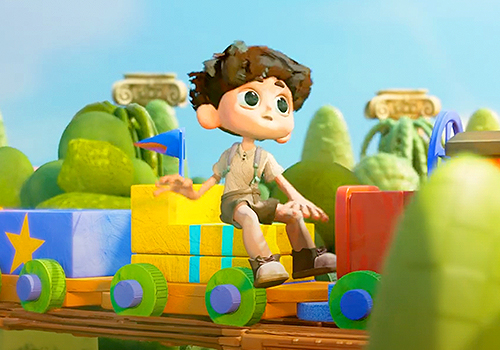
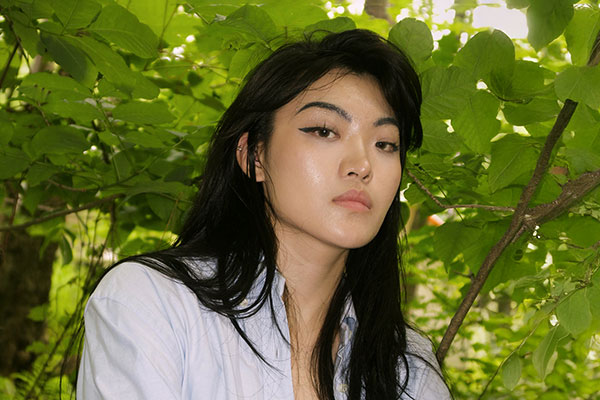
Xiaochen Zheng is a New York–based 3D artist and animator who blends psychology and visual storytelling to create emotionally driven worlds. Her graduate film Wonderland uses symbolic imagery and cinematic design to explore healing, identity, and the inner spaces we build to feel safe.
1 Congratulations on your achievements in the MUSE Creative Awards! Could you start by introducing yourself or your agency? Can you also share a bit about your journey into your current industry?
Thank you! My name is Xiaochen Zheng, and I’m a 3D artist, animator, and visual storyteller based in New York. I graduated from the School of Visual Arts MFA Computer Arts program, where I developed my short film Wonderland. My journey into animation began with a deep love for illustration and emotional storytelling. Over time, I became fascinated by how 3D art can merge design, psychology, and visual poetry to express complex human experiences. That curiosity led me to explore modeling, texturing, rigging, and motion — and eventually to create Wonderland, a film that combines cinematic aesthetics with psychological symbolism. Through my work, I aim to connect fine art sensitivity with digital craftsmanship, building worlds that feel both tangible and deeply emotional.
2 What inspired you to submit your work for this competition, and what does winning mean to you personally and professionally?
I decided to submit Wonderland to the MUSE Creative Awards because I wanted to share a story that speaks to emotional healing, belonging, and identity — themes that are deeply personal to me. The film reflects my journey of understanding how people build “security zones” to protect themselves, and how healing begins when we step beyond them — but also how, when taken too far, that same protection can hinder personal growth and connection. I’ve always admired the many creative works and innovative designs showcased in competitions like MUSE. It’s inspiring to witness the diversity of voices and imagination in the creative community. Submitting Wonderland was also a way for me to see if I could be part of that conversation — to stand among artists I deeply respect. I’m proud and grateful to see my work included among them. Winning this award means a great deal to me both personally and professionally. Personally, it affirms that vulnerability and sincerity in storytelling can connect across cultures. Professionally, it motivates me to keep pushing the boundaries between art and technology — to continue creating emotional, visual worlds that speak universally. It’s a reminder that honest stories have impact, and I’m grateful to be part of a community that celebrates that.
3 Can you share the story behind your success? What inspired its creation, and what do you feel it represents in today’s industry?
The story behind Wonderland comes from my own experiences of feeling marginalized and searching for a sense of belonging. As a child, I often imagined a safe place in my mind — a world where I could escape from reality. Over time, I realized that this “security zone” could both protect and isolate me. That paradox became the emotional foundation of Wonderland: a visual journey through healing, self-acceptance, and the danger of being trapped in one’s own comfort. What inspired its creation was the intersection between psychology and art — the idea that colors, light, and space can express emotions that words cannot. Through this film, I wanted to merge emotional truth with visual design, creating a poetic world that reflects human fragility and resilience. In today’s industry, I believe Wonderland represents a growing voice among young artists who value authenticity, vulnerability, and emotional storytelling. It reminds us that technology is not just a tool for perfection, but a bridge to connect human feelings in an increasingly digital world.
4 What do you believe set your project apart in such a competitive field? Were there specific elements or strategies that made it shine?
I believe what set Wonderland apart was its emotional honesty and its fusion of psychological storytelling with cinematic design. Rather than focusing purely on technical spectacle, I wanted every visual choice — from lighting and color to motion and sound — to serve a deeper emotional truth. Each frame was carefully crafted to mirror the character’s inner world, creating a dreamlike yet grounded visual language. Another key element was the blending of fine art sensibility with 3D animation. I approached Wonderland as both a painter and a filmmaker, combining soft, tactile textures with digital precision to evoke a sense of human warmth within a digital medium. Strategically, I focused on pacing and atmosphere — letting silence, rhythm, and minimalism guide the viewer’s emotions. In an industry full of high-energy visuals, I wanted Wonderland to stand out through stillness, sincerity, and a universal emotional resonance that speaks quietly but deeply.
5 Every project has its challenges. Can you share a significant obstacle you faced during this process and how you overcame it?
As a group project, Wonderland taught us the importance of collaboration and communication. One of our biggest challenges was coordinating across different creative disciplines — from storyboarding and visual development to sound design and scoring. My teammate and I spent countless hours revising storyboards and refining every visual element to ensure the emotional tone stayed consistent from start to finish. We were also fortunate to collaborate with the music group SONÜM, whose sound beautifully complemented our visuals. Working with them was a rewarding experience that showed us how sound can elevate emotion. Before that collaboration, we struggled with certain sound effects and atmosphere balancing, which took time and research to resolve. Reaching out to experts and learning from them became a vital part of our process. In the end, what helped us overcome these challenges was our shared curiosity and willingness to push boundaries. We never hesitated to learn new techniques or step outside our comfort zones, and that spirit of openness made the project both challenging and deeply fulfilling.
6 Winning an award of this caliber often brings recognition. What do you hope this achievement will mean for your career, your team, or your agency in the long run? Have you already noticed any changes or opportunities arising from this recognition?
Winning a MUSE Creative Awards is deeply encouraging for both me and my team. It’s not only a recognition of our effort, but also a reminder that independent and emotionally driven storytelling can find its place in the global creative landscape. I hope this achievement will open more doors for us to collaborate with artists and studios who value sincerity, experimentation, and narrative depth. For me personally, this recognition strengthens my confidence to keep creating worlds that blend emotion and design — to continue exploring the space where art, psychology, and storytelling meet. For our team, it’s a meaningful milestone that validates the countless hours we spent experimenting and learning together. We’ve already begun receiving more attention and interest from creative professionals who have seen Wonderland, and it has sparked conversations about future collaborations. Most importantly, it reminds us why we create — not just for recognition, but to connect, to move people, and to keep growing as artists.
7 What has the reaction been from clients, audiences, or stakeholders about your winning entry? Any feedback or memorable moments that stand out?
The reactions to Wonderland have been both emotional and thought-provoking. Many viewers told us that the film reminded them of their own childhood experiences — moments of being misunderstood, marginalized, or searching for a safe place to belong. The psychological theme resonated deeply, especially the idea that people can become comfortable in the wrong environments, and that comfort can quietly turn into isolation or even harm. In the story, the little boy ultimately becomes a villain within his own “Wonderland,” which often surprises audiences. But that twist reflects something real in our community — how emotional protection can sometimes evolve into aggression or detachment. It challenges the line between right and wrong, showing that it isn’t always clear. When we attended other screenings and festivals, many people were moved by the film’s atmosphere and visual poetry, yet unsettled by the ending. Hearing those mixed emotions — awe, sadness, reflection — was incredibly meaningful to us. It showed that Wonderland doesn’t just tell a story; it opens a conversation about the human need for safety, and how that desire can shape who we become.
8 For those aspiring to achieve similar success, what advice would you offer to help them not only thrive in their industries but also craft compelling, award-worthy entries? Are there specific practices, mindsets, or strategies you believe are key?
My biggest advice would be to create from a place of honesty. Audiences can always feel when a story comes from something real — whether it’s a memory, an emotion, or a question you haven’t yet answered yourself. Don’t start by trying to make something “award-worthy”; start by expressing something you deeply care about. The sincerity behind your work will naturally make it stand out. When I attended New York Advertising Week, I heard from CEOs and creators who emphasized the same message: authenticity matters. The industry keeps evolving, but what truly connects people are honest works — stories that carry heart, courage, and creativity. No matter how the tools or trends change, the core remains the same — be truthful and keep telling meaningful stories. Another key mindset is to embrace vulnerability and curiosity. Every project is a process of discovery — visually, emotionally, and technically. Be willing to experiment, to fail, and to learn from people outside your own discipline. In Wonderland, that openness to collaboration — from music to storytelling to design — made the project stronger in every way. And most importantly, take your time to understand why you’re creating. Awards are meaningful, but what lasts is the connection your work builds with people. When your story speaks with truth and empathy, it will find its own audience — and that, to me, is the most powerful form of success.
9 The creative industry is constantly evolving. How do you view these changes, and where do you hope to position yourself in the future?
I think the most exciting thing about today’s creative industry is how fluid it has become. Boundaries between art, design, and technology are constantly shifting, giving artists more freedom than ever to express ideas across different mediums. At the same time, this evolution challenges us to stay authentic — to ensure creativity isn’t lost in the noise of trends or algorithms. I see these changes as an invitation to keep learning and to find meaning within innovation. As tools like AI, virtual production, and immersive storytelling grow, I hope to position myself as an artist who bridges emotional storytelling with emerging technologies — someone who uses digital media not just for spectacle, but to evoke empathy and reflection. In the future, I want to continue creating worlds that connect people on a human level, no matter how the platforms or tools evolve. For me, the core will always be the same: to tell stories that feel honest, healing, and deeply human.
10 Entering awards can be daunting for many, especially those just starting out. What would you say to individuals who have limited experience, or are hesitant to showcase their work in competitions? How can they build confidence and see the value in participating?
I completely understand that feeling — submitting your work can feel vulnerable, almost like exposing a piece of your heart. But that vulnerability is also what makes it meaningful. Competitions like the MUSE Creative Awards are not just about winning; they’re about sharing your voice with a wider creative community. My advice to those just starting out is to trust your journey and your perspective. Everyone begins somewhere, and every artist’s voice brings something unique to the conversation. You don’t need to wait until you feel “ready” — creativity is never finished; it’s always growing. When I submitted Wonderland, I also wasn’t sure how it would be received. But I saw it as a chance to connect, to learn from others, and to understand where my work stood among so many talented creators. That experience alone was invaluable. Entering competitions helps you build confidence not through comparison, but through participation — by stepping forward and saying, this is my story. And the moment you take that step, you’re already growing as an artist.
11 Creativity thrives on community. What message would you like to share with fellow creatives, marketers, and advertising professionals?
I believe creativity is most powerful when it’s shared — when artists and storytellers come together to listen, collaborate, and inspire one another. No matter how different our mediums are, we’re all working toward the same goal: to move people, to spark emotion, and to make the world feel a little more connected. To my fellow creatives, marketers, and advertising professionals, I’d say: keep creating with sincerity. Trends will shift and technologies will evolve, but honesty and empathy will never go out of style. I was deeply inspired hearing industry leaders talk about building authenticity — making work that not only captures attention but also carries meaning. That message stayed with me. We have the privilege and responsibility to shape how people feel and think through what we create. So let’s keep telling stories that are not just clever or beautiful, but human. When creativity comes from a place of truth and collaboration, it can reach hearts far beyond what we imagine.
12 Winning is a team effort in many cases. Is there someone or a group of people you’d like to dedicate this achievement to, and why?
Absolutely — this achievement truly belongs to everyone who helped bring Wonderland to life. I’d like to dedicate it to my amazing teammates Yadan Tan and Xinyao Yan, whose creativity and dedication shaped the film. Yadan crafted beautiful visuals and motion graphics that gave the story its rhythm and flow, while Xinyao handled all the lighting and rendering with incredible care, making every frame smooth, luminous, and full of atmosphere. A special thank-you also goes to the music group SONÜM, whose sound and scoring elevated the emotional core of the film. Working with them was a wonderful reminder of how collaboration across different art forms can deepen meaning and emotion. I’m also deeply grateful to our professors and mentors from the School of Visual Arts, as well as the many professionals and advisors from the animation industry who generously shared their insights throughout the process. Most of all, I dedicate this to anyone who has ever felt unseen or out of place. Wonderland was created for them — to remind us that vulnerability and imagination can lead to healing, understanding, and connection.
13 If you could describe your award-winning entry in one sentence, what would it be and why?
Wonderland reflects on how seeking emotional security doesn’t always lead to goodness — and how comfort can sometimes conceal harm. It explores the psychology of safety and morality, showing that feeling secure doesn’t necessarily make us good, and that true growth begins when we step beyond comfort.
14 Finally, what’s next for you? Any exciting projects or upcoming goals that you’d like to share with us and the audience?
Looking ahead, I want to continue exploring the intersection between art, psychology, and healing. After creating Wonderland, I became even more fascinated by how visual storytelling can serve as a form of emotional expression — almost like art therapy. I’m currently developing new projects that dive deeper into how color, space, and movement can reflect mental states and help people process their inner worlds. My next goal is to expand this exploration into both digital and physical experiences — combining animation, installation, and interactive media to create spaces where viewers can feel seen and comforted. Ultimately, I hope my future works continue to bridge creativity and empathy — showing that art doesn’t just tell stories; it can also heal, connect, and transform.