Interview
Cizzoe Yi Wang
United States
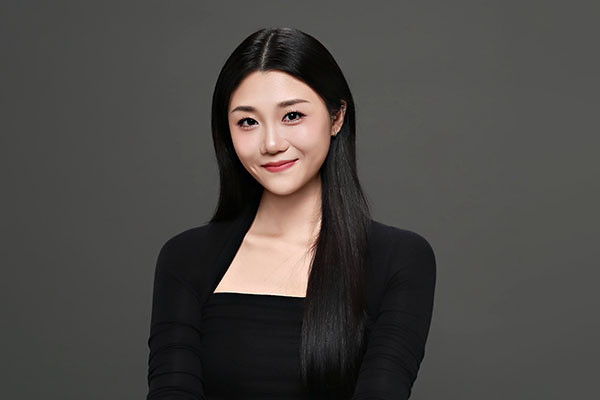
Cizzoe Yi Wang is an interdisciplinary contemporary artist whose work spans installation, performance, and moving image. Her award-recognized documentaries, screened at Tate Modern London, combine conceptual rigor with experimental storytelling.
1 Congratulations on your achievements in the MUSE Creative Awards! Could you start by introducing yourself or your agency? Can you also share a bit about your journey into your current industry?
Hi, I’m Cizzoe Yi Wang, an interdisciplinary contemporary artist working across installation, sculpture, performance, and moving image. I entered this field as a contemporary artist whose practice is grounded in conceptual thinking. Moving image was my starting point, and my documentaries have been shown at Tate Modern London and recognized by awards. As my practice evolved, I expanded into multiple mediums, and my installation works have since been exhibited in prestigious London galleries including ASC Gallery, Gallery 46, and Candid Arts Gallery.
2 What inspired you to submit your work for this competition, and what does winning mean to you personally and professionally?
I wanted to position my artistic practice within a rigorous international award context and connect with a wider audience. Winning this award is deeply affirming on both a personal and professional level. It confirms the direction of my methodology and strengthens my motivation to continue refining my conceptual approach.
3 Can you share the story behind your success? What inspired its creation, and what do you feel it represents in today’s industry?
The uniqueness of my work comes from my multidisciplinary background. My training in anthropology allows me to treat artistic creation as a form of practice-based research and social experimentation. Whether through installation, sculpture, performance, or moving image, I am always engaging with others to understand our social experiences. For me, this award reflects a broader shift in today’s creative landscape, one where contemporary art increasingly moves beyond personal expression and toward social engagement. Artists are not only innovating in form, but also interrogating relationships, power structures, and cultural differences.
4 What do you believe set your project apart in such a competitive field? Were there specific elements or strategies that made it shine?
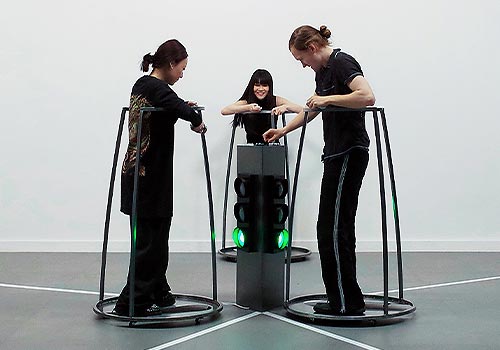
My work consistently begins with the question of what shapes us as human beings. I often construct micro-social worlds where participants navigate rules, negotiations, and shifting power. This anthropological approach allows me to move between the roles of observer, creator, and participant, creating a dynamic and reciprocal relationship between the artwork and its audience. In a time of global interconnectedness and information fragmentation, this inquiry into how we understand and coexist with the “other” resonates deeply.
5 Every project has its challenges. Can you share a significant obstacle you faced during this process and how you overcame it?
One of the biggest challenges is accepting opposing interpretations. Because my works are participatory, they naturally generate dialogue, friction, and diverse responses. My concepts are personal and conceptual, so participants often project their own experiences onto the work, including those who disagree with my ideas. I choose to stay open to all feedback. These conversations often spark new reflections and expand my conceptual framework. Rather than weakening the work, they enrich it.
6 Winning an award of this caliber often brings recognition. What do you hope this achievement will mean for your career, your team, or your agency in the long run? Have you already noticed any changes or opportunities arising from this recognition?
I see this recognition as a way for more institutions and galleries to discover my practice, and I am excited about future collaborations, including commissions. I have already noticed increased interest from organizations, which is very encouraging.
7 What has the reaction been from clients, audiences, or stakeholders about your winning entry? Any feedback or memorable moments that stand out?
Winning the award has definitely brought more attention to my work. I have received messages from people who want to learn more or explore collaboration opportunities, including an invitation from Volterra Art Week 2026.
8 For those aspiring to achieve similar success, what advice would you offer to help them not only thrive in their industries but also craft compelling, award-worthy entries? Are there specific practices, mindsets, or strategies you believe are key?
Authenticity, conceptual clarity, and interdisciplinarity are key today. All the sincerity and experimentation you put into a work become visually present. So I would say: express boldly, take risks, experiment widely, and let the audience challenge you. These interactions shape stronger works.
9 The creative industry is constantly evolving. How do you view these changes, and where do you hope to position yourself in the future?
I believe artistic practice does not need to follow trends. It is more important to trust your voice, expand your experiences, and stay attentive to the details of daily life. Enter communities, speak with different groups of people, and new insights will naturally emerge and reveal themselves in the work.
10 Entering awards can be daunting for many, especially those just starting out. What would you say to individuals who have limited experience, or are hesitant to showcase their work in competitions? How can they build confidence and see the value in participating?
Experiment widely and create as much as you can. Even a project made simply as a “practice exercise” can carry unexpected value if documented well. When applying, read the competition criteria carefully. Understanding the jury, audience, and thematic focus can significantly increase your chances of success.
11 Creativity thrives on community. What message would you like to share with fellow creatives, marketers, and advertising professionals?
I encourage everyone to engage more with fieldwork—that means entering communities, talking to people, and observing how individuals navigate their realities. Embodied research offers diverse perspectives and enriches artistic creation. For example, in 2021 I conducted a field study in a rural middle school in Guangxi, China, focusing on the issue of “institutional orphans.” That experience later became my documentary Them and Us, which went on to receive international recognition, including nominations from the Royal Television Society and the North East International Film Festival in the UK.
12 Winning is a team effort in many cases. Is there someone or a group of people you’d like to dedicate this achievement to, and why?
People are at the center of my work, both conceptually and practically. I would like to thank every participant who has appeared in my projects: the artists in my performance work, the audiences in my participatory installations, and the individuals who generously shared their lives in my documentaries.
13 If you could describe your award-winning entry in one sentence, what would it be and why?
A continuous practice of observing life, engaging with people, and experimenting across disciplines.
14 Finally, what’s next for you? Any exciting projects or upcoming goals that you’d like to share with us and the audience?
I’m currently continuing my exploration of interpersonal interaction as a game-like social performance governed by explicit and implicit rules. I am developing new installations and performances that construct micro-social systems where participants navigate and reinterpret structured environments. These interactions often produce unexpected outcomes, and I see them as opportunities to create more space for autonomy, agency, and human expression.