Interview
Kateryna Kazachkova
AMTOSS & BulkSource, Poland
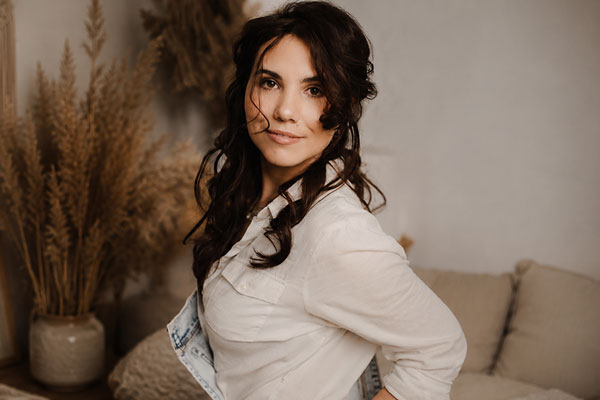
Kateryna Kazachkova is a product designer whose work bridges large-scale B2B platforms and deeply personal digital storytelling. Guided by a belief in honest, useful design with a touch of unexpected creativity, she crafts experiences that are both purposeful and memorable.
1 Congratulations on your achievements in the MUSE Creative Awards! Could you start by introducing yourself or your agency? Can you also share a bit about your journey into your current industry?
My name is Kateryna Kazachkova. I am Head of Design Department at AMTOSS and Lead Product Designer at BulkSource, where I help build large-scale B2B platforms. However, Ukrainska 15 is something different—a personal project that I designed and developed entirely on my own. I began my journey in design nearly a decade ago. Originally from Kupiansk, Ukraine, I was always creating something as a child. I entered design competitions, loved to draw, and even created calendars in PowerPoint that were printed and distributed throughout my hometown. I first studied computer modeling, earned a PhD, and hold a Ukrainian patent. That technical background eventually led me to design, where my analytical mindset and creative instincts came together. Over the years, I transitioned from graphic design to product design, but one principle has remained constant: be honest, be useful, and never be afraid to add a little weirdness.
2 What inspired you to submit your work for this competition, and what does winning mean to you personally and professionally?
Ukrainska 15 is deeply personal, so submitting it required a certain kind of courage. It is not a client project—it is my own story about memory and war. I wanted it to reach audiences beyond my immediate circle because I believe its message deserves to be shared more widely. Winning means that a quiet, deeply personal project can resonate far beyond where it began. Professionally, it reinforces my belief that authentic, meaningful work is worth pursuing alongside commercial projects. Personally, it reminds me that the experiences I sought to honor have been seen and understood.
3 Can you share the story behind your success? What inspired its creation, and what do you feel it represents in today’s industry?
Ukrainska 15 is a scroll-based long-form experience about memory and war. It reconstructs the first months of the full-scale invasion through my personal experience, told not through statistics but through fragments of everyday life: notes, timestamps, photographs, and snippets of conversations. I wanted to capture how ordinary life changes during a crisis—searching for food when stores are empty, relying on rumors when official information disappears, and holding onto small routines while everything around you feels uncertain. As readers scroll, text, images, and subtle animations gradually emerge, reflecting the way memories often resurface over time. The final section invites others to share their own stories. To me, it represents collective memory and the lasting impact of conflict, showing how these experiences continue to shape people's lives long after the events themselves.
4 What do you believe set your project apart in such a competitive field? Were there specific elements or strategies that made it shine?
I believe the project stood out because every design decision served the story rather than simply decorating it. Trauma is rarely experienced in a linear way, so a conventional layout would not have reflected that reality. Instead, I designed the experience to unfold in fragments, allowing the story to emerge gradually and at an emotional pace. Everything began with a single question: "What does the memory of war actually feel like?" From there, I built the project using real fragments from my personal archive and began prototyping the scrolling experience early to refine its pacing. Because I was responsible for the UX, UI, and development, every interaction and animation was carefully designed to support the narrative rather than distract from it.
5 Every project has its challenges. Can you share a significant obstacle you faced during this process and how you overcame it?
The hardest part of this project was not technical—it was personal. The greatest challenge was revisiting my memories of the occupation and the basement where we took shelter, allowing myself to relive those experiences in order to tell the story with honesty and authenticity. This is not a story about the events of war alone; it is about the experiences that remain long after they have passed. Translating those memories into a meaningful design required giving them shape without turning them into spectacle. Every creative decision was grounded in lived experience rather than imposed conceptually, and working independently across the design and development process allowed the project to unfold with the care and emotional pacing the story required.
6 Winning an award of this caliber often brings recognition. What do you hope this achievement will mean for your career, your team, or your agency in the long run? Have you already noticed any changes or opportunities arising from this recognition?
More than anything, I hope this recognition helps the story of Kupiansk and Ukraine reach a wider audience, allowing the experiences of ordinary people living through occupation to be heard around the world. On a personal level, creating this project became part of my own healing journey. Seeing it recognized reminds me that sharing difficult experiences with honesty can foster understanding and connection. More than any professional opportunity, I hope it encourages others to discover the project and contribute their own stories, allowing individual memories to become part of a shared collective history.
7 What has the reaction been from clients, audiences, or stakeholders about your winning entry? Any feedback or memorable moments that stand out?
One of the first responses came from the awards themselves. Recognition from an international jury showed me that the story had reached people far beyond my own experience. However, the responses that have meant the most have been deeply personal. Visitors began sharing their own stories through the project, and one person wrote to say that it helped them feel less alone. For a project centered on memory and trauma, that was the most meaningful response I could receive. It affirmed that a personal story can become a shared one, and that honest storytelling has the power to help people feel seen and understood.
8 For those aspiring to achieve similar success, what advice would you offer to help them not only thrive in their industries but also craft compelling, award-worthy entries? Are there specific practices, mindsets, or strategies you believe are key?
My advice is simple: don't design for awards, design for something meaningful. The most memorable work comes from honesty and curiosity, not from chasing trends. Recognition is often the result of creating work with purpose rather than pursuing recognition itself. Don't be afraid to explore personal, challenging, or unconventional subjects. The projects that feel the most vulnerable are often the ones that connect most deeply with others. Most importantly, don't wait for your work to feel perfect before sharing it. Publish it, invite feedback, and keep improving. Confidence rarely comes before you share your work—it grows because you do.
9 The creative industry is constantly evolving. How do you view these changes, and where do you hope to position yourself in the future?
The tools and trends will continue to evolve, but the foundations of good design—curiosity and empathy—remain constant. As creative production becomes faster and more automated, I find even greater value in thoughtful, intentional work and in stories that can only be told through lived experience. Looking ahead, I hope to continue designing complex B2B products while making space for personal projects like Ukrainska 15 that reflect honest storytelling and meaningful design. Above all, I want to remain a lifelong learner, because curiosity is the one quality that never loses its value.
10 Entering awards can be daunting for many, especially those just starting out. What would you say to individuals who have limited experience, or are hesitant to showcase their work in competitions? How can they build confidence and see the value in participating?
I used to think design competitions were only for established names, but every designer has a story worth telling. Participating is not just about winning—it is an opportunity to step back, reflect on your work, and better understand what makes it unique. Don't wait until you feel completely ready, because that moment rarely comes. Start where you are, even if your first submission feels imperfect. Personal and unconventional projects deserve to be seen, and they often resonate in unexpected ways. Confidence does not come before you share your work—it grows because you do.
11 Creativity thrives on community. What message would you like to share with fellow creatives, marketers, and advertising professionals?
Creativity is not a competition—it is a conversation. We learn from one another's ideas, experiences, and perspectives, so I believe it is important to share knowledge, support meaningful work, and remain curious about what others are creating. Use your craft to tell stories that matter, not just those that are commercially successful. Above all, stay human. Tools and trends will continue to evolve, but empathy, honesty, and genuine curiosity are what give creative work lasting value.
12 Winning is a team effort in many cases. Is there someone or a group of people you’d like to dedicate this achievement to, and why?
Although this was a solo project, it does not belong to me alone. I dedicate it to everyone whose strength and resilience through times of war inspired the story this project seeks to preserve. I also dedicate it to my family, who experienced these moments alongside me, and to my daughter, who inspires me to create meaningful work and preserve these memories for future generations.
13 If you could describe your award-winning entry in one sentence, what would it be and why?
A reflection on how ordinary life changes during times of conflict, told through memory, design, and lived experience.
14 Finally, what’s next for you? Any exciting projects or upcoming goals that you’d like to share with us and the audience?
Looking ahead, I hope to continue growing as a designer while creating both meaningful digital products and personal projects that tell authentic stories. I also look forward to sharing my experience through talks, lectures, and conversations with the design community. Ukrainska 15 marked an important chapter in my creative journey, and it reinforced my belief in the power of thoughtful storytelling. That perspective will continue to guide the work I create in the years ahead.