Interview
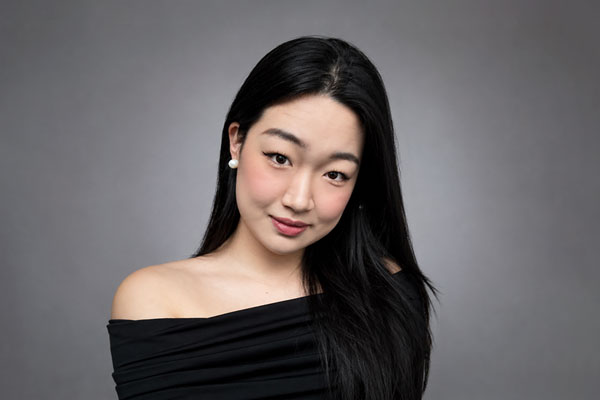
Yidi Wang
United States
Yidi Wang is a new media artist, interdisciplinary designer, curator, and educator whose practice spans performance, bio-art, multimedia installation, and interactive technology. Her work explores posthumanism, the female body, motherhood, and the evolving relationship between human and nonhuman life.
1 Congratulations on your achievements in the MUSE Creative Awards! Could you start by introducing yourself or your agency? Can you also share a bit about your journey into your current industry?
Thank you so much. My name is Yidi Wang, and I am a new media artist, interdisciplinary designer, curator, and educator based in Chicago. My practice moves across performance, multimedia installation, bio-art, sculpture, 3D fabrication, and interactive technology. I am especially interested in post-humanism, the female body, motherhood, care, control, and the blurred boundaries between human and non-human life.My journey into this field started from design, but gradually expanded into performance and experimental art. I studied industrial design during my undergraduate education, where I built a strong foundation in form, material, product thinking, and digital fabrication. Later, during my MFA in Design for Emerging Technologies at the School of the Art Institute of Chicago, my work became more interdisciplinary. I began using my own body, biological materials, digital tools, and installation environments to explore personal and social questions.Over time, I realized that technology is not only a tool for making things look futuristic. For me, it is a way to ask deeper questions about identity, reproduction, vulnerability, and the systems that shape our bodies. My work often combines intimate personal experience with speculative futures. Post-Birth, the project recognized by the MUSE Creative Awards, came from this path. It reflects my ongoing research into post-human motherhood and asks what it means to care for life forms that are part of us, but also beyond us.
2 What inspired you to submit your work for this competition, and what does winning mean to you personally and professionally?
I was inspired to submit Post-Birth because I wanted the work to reach a broader audience beyond the gallery and academic space. The project is very personal, but it also speaks to larger questions about motherhood, the body, care, control, and the boundaries between human and non-human life. I felt that the MUSE Creative Awards would be a meaningful platform to share this kind of experimental, interdisciplinary work with an international creative community.Winning the Silver Award means a lot to me personally. Post-Birth came from a vulnerable place, especially my reflections on motherhood, my relationship with my own mother, and the social expectations placed on women’s bodies. To have this work recognized makes me feel that these intimate and difficult questions can resonate with others.Professionally, this award encourages me to continue pushing the boundaries between art, technology, biology, and performance. As an interdisciplinary artist, this recognition affirms that my practice carries value not only as personal expression, but also as a critical framework for rethinking relationships between humans, non-humans, and forms of care.
3 Can you share the story behind your success? What inspired its creation, and what do you feel it represents in today’s industry?
The story behind Post-Birth began with my long-term research into post-humanism, motherhood, and the relationship between care and control. I was interested in what motherhood could mean beyond the traditional human family structure. Instead of thinking of motherhood only as giving birth to a human child, I wanted to imagine a speculative form of motherhood between a human body and non-human life.In this performance and installation, I collected bacteria from my own hair, skin, and nails, and cultivated them inside an external “uterus” that I wore on my abdomen. During the performance, I cared for the bacteria through daily rituals, almost like a prenatal routine. Later, the bacteria were moved into an infant incubator, while the external uterus was preserved as a specimen. Through this process, I wanted to question where life begins, who deserves care, and how the idea of motherhood can be expanded, challenged, or even liberated.The work was also inspired by my personal reflections on maternal relationships and the emotional structures around care. I am interested in how care can be loving, but also controlling; how motherhood can be intimate, but also shaped by social pressure and sacrifice. Post-Birth allowed me to transform these personal feelings into a larger conversation about bodies, kinship, and responsibility.In today’s creative industry, I think this work represents the importance of interdisciplinary practice. Art, technology, biology, performance, and design are no longer separate fields. They can come together to ask urgent questions about the future of humanity. For me, Post-Birth is not only an artwork about reproduction. It is a proposal for rethinking life, care, and connection in a post-human world.
4 What do you believe set your project apart in such a competitive field? Were there specific elements or strategies that made it shine?
I believe what set Post-Birth apart was its combination of personal vulnerability, conceptual depth, and experimental use of materials. The work is not only a performance or an installation. It brings together bio-art, body-based practice, sculpture, video documentation, and speculative storytelling to create a complete emotional and conceptual experience. One important element was the use of real biological material. By cultivating bacteria collected from my own hair, skin, and nails, the work created a direct relationship between my body and the non-human life forms I cared for. This made the project feel intimate, uncomfortable, and alive at the same time. The bacteria were not just symbols; they were living extensions of my body. Another element was the visual and performative structure. The external uterus, the daily care rituals, the infant incubator, and the preserved specimen all borrowed language from pregnancy, medical systems, and motherhood. But instead of repeating traditional ideas of birth, the work transformed them into something unfamiliar. This tension between the familiar and the strange helped the piece open deeper questions about care, control, life, and responsibility. I also think the project stood out because it did not use technology only for visual effect. The technology, biological process, and installation environment all served the concept. Every material choice supported the central question: how can we rethink motherhood and kinship in a post-human world? For me, that is where the strength of the work comes from — it is visually striking, but also emotionally and intellectually grounded.
5 Every project has its challenges. Can you share a significant obstacle you faced during this process and how you overcame it?
One of the biggest challenges in creating Post-Birth was balancing the biological process, the performative structure, and my own physical experience. Because the work involved cultivating bacteria from my own body, I had to think carefully about safety, containment, visibility, and care. The bacteria were living organisms, so the project could not be treated like a fixed sculpture. It required daily attention, monitoring, and responsibility. Another major challenge was wearing the external uterus on my body throughout the performance. It was physically uncomfortable and emotionally intense. The weight, the smell, and the social discomfort of carrying a visible biological system on my abdomen made the performance difficult, but those difficulties also became part of the work. They helped me understand motherhood not as an abstract idea, but as a lived condition shaped by labor, restriction, care, and vulnerability. I overcame these challenges by treating the process itself as part of the artwork. Instead of hiding the discomfort or uncertainty, I allowed them to become visible. I documented the daily care rituals, adjusted the installation carefully, and built a structure that could hold both the scientific and emotional sides of the project. In the end, the obstacles made the work stronger because they revealed the real tension between care and control, intimacy and responsibility.
6 Winning an award of this caliber often brings recognition. What do you hope this achievement will mean for your career, your team, or your agency in the long run? Have you already noticed any changes or opportunities arising from this recognition?
Winning the MUSE Creative Awards Silver recognition is very meaningful to me because it gives Post-Birth visibility beyond my immediate artistic community. In the long run, I hope this achievement will help me connect with more curators, institutions, collaborators, and audiences who are interested in experimental art, bio-art, performance, and advanced technologies As an interdisciplinary artist, my work often exists between different fields. It is not only fine art, not only design, not only technology, and not only performance. Because of that, recognition from an international award platform helps validate the hybrid nature of my practice. It encourages me to continue creating projects that cross boundaries and ask difficult questions about the body, care, reproduction, and post-human futures. Personally, this award gives me more confidence to keep expanding Post-Birth into a larger body of work. It also supports my long-term goal of building a stronger professional presence as an artist, curator, and educator. I hope this recognition can open more opportunities for exhibitions, residencies, grants, and conversations with people who care about the relationship between art, technology, biology, and social issues. I have already noticed that the award has helped me speak about the project with more confidence. It gives the work a stronger public context and allows people to understand that experimental and vulnerable projects can also be professionally recognized. For me, that is very important. It shows that deeply personal work can still carry broader cultural and creative value.
7 What has the reaction been from clients, audiences, or stakeholders about your winning entry? Any feedback or memorable moments that stand out?
The reaction to Post-Birth has been very meaningful to me. Many audiences were first drawn to the visual and material language of the work — the external uterus, the incubator, the biological elements, and the clinical installation environment. But after spending time with the piece, many people began to talk about their own understanding of care, motherhood, body, and emotional inheritance. One memorable response was that people did not only see the bacteria as scientific material. They began to see them as living beings that carried a relationship with my body. This was important to me because the work asks audiences to reconsider what kinds of life deserve attention, protection, and care. Some viewers described the work as unsettling but tender, which is exactly the tension I wanted to create. I also received feedback from people who connected the project to their own family relationships, especially complicated relationships between mothers and children. That was very powerful for me. Although Post-Birth uses speculative and post-human language, it comes from a very human emotional place. When viewers recognized both the discomfort and the tenderness in the work, I felt that the project had created the kind of conversation I hoped for. After receiving the MUSE Creative Awards Silver recognition, the work also gained a stronger sense of public validation. It helped audiences and professional peers understand that experimental, vulnerable, and interdisciplinary work can have a place in a broader creative industry. That recognition has encouraged more conversations around bio-art, performance, and the future of care.
8 For those aspiring to achieve similar success, what advice would you offer to help them not only thrive in their industries but also craft compelling, award-worthy entries? Are there specific practices, mindsets, or strategies you believe are key?
My advice is to create from a place that feels honest, even if it feels vulnerable or difficult. A strong project does not only need to be visually impressive. It needs to carry a clear question, a strong point of view, and a reason for existing. For me, Post-Birth became powerful because it came from both personal experience and long-term research. It was not made only to fit a trend; it came from questions I truly needed to ask. I also believe artists and designers should not be afraid to work across different fields. Some of the most meaningful creative work today happens between disciplines. In my own practice, performance, biology, sculpture, technology, and installation all support each other. Instead of treating technology as decoration, I try to make sure every material and process has conceptual meaning. For award submissions, I think storytelling is very important. The entry should clearly explain not only what the project looks like, but also why it matters. What problem, question, or feeling does it respond to? What makes the process unique? What kind of conversation can it open for the audience? A compelling entry helps the jury understand the heart of the work. My biggest mindset is to stay committed to your own voice. Recognition is meaningful, but it should not be the only reason we create. If the work is honest, carefully developed, and conceptually grounded, it will have a stronger chance to connect with people. For other creatives, I would say: trust the strange questions, document your process, refine your language, and allow your personal experiences to become part of a larger cultural conversation.
9 The creative industry is constantly evolving. How do you view these changes, and where do you hope to position yourself in the future?
I see the changes in the creative industry as both challenging and exciting. Today, the boundaries between art, design, technology, science, and social practice are becoming less fixed. Artists are no longer limited to one medium or one traditional role. We can work as researchers, storytellers, technologists, educators, and cultural thinkers at the same time. For me, this shift is very meaningful because my practice has always existed between different fields. I am interested in how advanced technologies, biological materials, performance, and installation can come together to ask deeper questions about the body, identity, care, and the future of life. I believe the future of creativity is not only about making new images or objects, but also about creating new ways to think, feel, and relate to each other. At the same time, I think it is important to approach technology critically. New tools such as AI, VR, AR, and bio-based processes can open many possibilities, but they also raise ethical questions. As artists, we need to ask who these technologies serve, whose bodies they affect, and what kinds of futures they are helping us imagine. In the future, I hope to position myself as an interdisciplinary artist who bridges experimental art, post-human research, education, and advanced technology. I want to continue creating works that are emotionally intimate, conceptually rigorous, and socially relevant. My goal is to create projects that do not simply follow the evolution of the creative industry, but actively contribute to shaping more thoughtful, inclusive, and imaginative futures.
10 Entering awards can be daunting for many, especially those just starting out. What would you say to individuals who have limited experience, or are hesitant to showcase their work in competitions? How can they build confidence and see the value in participating?
I would tell them that feeling hesitant is very normal, especially when the work is personal or experimental. Sharing your work with a larger audience can feel vulnerable, but it is also an important part of building a stronger professional voice as an artist or creative professional. You do not need to wait for perfect conditions before sharing a carefully developed work. Confidence often comes through the discipline of presenting, articulating, and refining one’s practice. For creatives preparing award submissions, I think awards and competitions should not only be seen as places to win. They are also opportunities to practice how to present your work, write about your ideas, document your process, and understand how your project communicates to people outside your immediate circle. Even if you do not win, the process itself can help you clarify your voice and strengthen your professional language. I also believe it is important to start with the work that feels most true to you. Do not try too hard to guess what a jury wants. Instead, focus on explaining why the project matters, what questions it raises, and what makes your process unique. A strong submission comes from both confidence and honesty. My advice is to begin small, keep good documentation, ask for feedback, and submit even when you feel nervous. Every submission is a way of saying that your work deserves to be seen. For me, participating in awards has helped me understand my own practice more clearly. It has also reminded me that even deeply personal, vulnerable, and unconventional work can connect with a broader audience.
11 Creativity thrives on community. What message would you like to share with fellow creatives, marketers, and advertising professionals?
My message would be to stay curious, stay generous, and stay connected to the human meaning behind the work. Whether we are artists, designers, marketers, or advertising professionals, we are all shaping how people see, feel, remember, and understand the world. That is a powerful responsibility. I believe creativity becomes stronger when it is shared. Community gives us feedback, support, challenge, and inspiration. It reminds us that creative work is not made in isolation. Even the most personal project is part of a larger conversation with audiences, collaborators, histories, and future possibilities. I would also encourage fellow creatives to make space for voices and stories that are often overlooked. The creative industry has the ability to make people visible, to question old systems, and to imagine new ways of living together. For me, meaningful creativity is not only about beauty or innovation. It is also about care, empathy, and transformation. To marketers and advertising professionals, I would say that storytelling has real cultural power. The way we frame ideas can influence what people value and who they choose to listen to. I hope we can continue using that power with intention, honesty, and responsibility. Most importantly, I hope we keep supporting one another. Awards and recognition are meaningful, but the deeper value of creative work is the community it builds and the conversations it opens.
12 Winning is a team effort in many cases. Is there someone or a group of people you’d like to dedicate this achievement to, and why?
I would like to dedicate this achievement to everyone who has supported my artistic journey, especially my mentors, peers, friends, and the communities that have strengthened my practice as an interdisciplinary artist. Although Post-Birth is deeply personal, it was shaped by many conversations, moments of support, and critical feedback from people around me. I also want to dedicate this recognition to my family, especially my mother. My relationship with motherhood, care, sacrifice, and emotional inheritance is at the center of this work. Post-Birth comes from a complicated but honest place. It reflects both love and tension, vulnerability and strength. In many ways, the project is my attempt to understand care beyond traditional expectations and to imagine a different kind of relationship between mother, child, body, and life. I am also grateful to the artists, educators, and communities who continue to make space for experimental and vulnerable work. This award is not only a personal milestone. It is also a reminder that intimate stories, especially those rooted in the body, family, and identity, deserve to be seen and discussed. Most importantly, I dedicate this achievement to anyone who has ever questioned where they belong, what they inherit, and how they can transform pain into care. Post-Birth is a work about life, responsibility, and connection, and I hope this recognition allows those questions to reach more people.
13 If you could describe your award-winning entry in one sentence, what would it be and why?
Post-Birth is a speculative performance and bio-art installation that reimagines motherhood as a relationship of care, control, vulnerability, and responsibility between the human body and non-human life. I would describe it this way because the work is not only about birth in a biological sense. It uses bacteria cultivated from my own body, an external uterus, daily care rituals, an infant incubator, and preservation methods to question what kinds of life we recognize, protect, and emotionally connect with. For me, the sentence captures the core of the project: expanding motherhood beyond human reproduction and using art to imagine new forms of kinship in a post-human world.
14 Finally, what’s next for you? Any exciting projects or upcoming goals that you’d like to share with us and the audience?
Moving forward, I hope to expand the questions in Post-Birth beyond womanhood and motherhood, toward a broader conversation about care, belonging, borders, and responsibility. Although the work began from my own body and my reflection on motherhood, I see these questions as universal. They also exist between nations, races, species, and communities. For me, Post-Birth asks: who is allowed to belong, and who is treated as foreign, dangerous, or unworthy of care? In today’s world, shaped by war, displacement, migration, racial tension, and climate crisis, this question feels urgent. The bacteria in the work are not only non-human organisms from my body; they also become a metaphor for lives that are connected to us but often feared, rejected, or excluded. In the future, I want to continue creating work that connects the intimate body with larger global realities. My goal is to use post-human thinking to imagine new forms of kinship across difference — between humans and non-humans, citizens and migrants, nations and strangers. For me, becoming post-human is not about leaving humanity behind, but about expanding the circle of care.

